DOG DENTAL HEALTH, MADE CLEAR
Dog dental care.
What actually helps?
Bad breath, plaque, tartar and sore gums are different problems. Learn what you can do at home, when your dog needs a vet, and how to judge the evidence behind dental products.
Veterinary guidance · Transparent ingredients · Practical daily care
THE CARE MAP
A clear next step
for every mouth.
01Breath, eating habits & signs of pain
Hidden disease, treatment & costs
Brushing, useful adjuncts & evidence
Published by Pup Choice / Brainiac Brands. Ownership & editorial standards
A good place to start
What brought you here?
Follow the question that sounds
most like your dog.
Bad dog breath
Learn why dog breath smells, when to call a veterinarian, and where breath-support powders fit into a daily dental routine.
Understand the progressionPlaque, tartar and gum health in dogs
Understand plaque versus tartar, gingivitis versus periodontitis, and why fresher breath alone does not prove a healthier mouth.
Plan the costDog teeth cleaning cost
Compare published veterinary dental price examples, understand extractions and X-rays, and calculate the daily cost of home-care powder.
Look closer
Clean teeth. Soft plaque. Hardened tartar.
They need different kinds of care. These close-ups make the difference easier to understand.
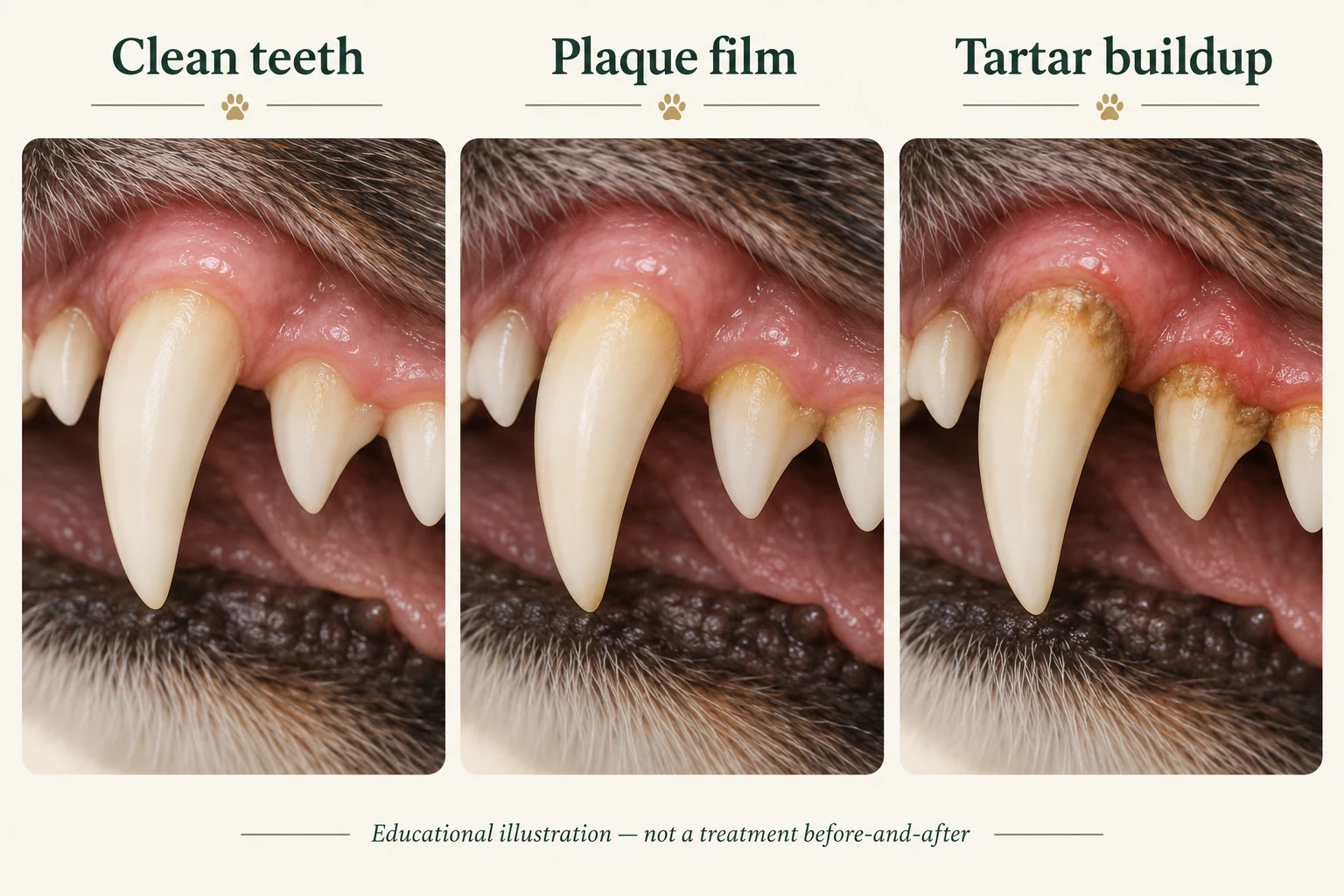
Daily care helps maintain a comfortable mouth.
A bacterial film that brushing helps disrupt.
Ask your vet about professional removal.
It goes beyond breath
How dental pain affects
eating and play.
Your dog’s mouth is part of their everyday quality of life. Dental discomfort can change how they chew, play and respond to touch—even when they keep eating.
Learn the signs of pain, how gum disease develops, and why veterinary care and a daily routine belong together.
Understand dog dental health →Find the right combination
One mouth. More than one tool.
A brush, a veterinary visit and a convenient daily adjunct do different jobs. Knowing which job you need makes choosing easier.
Veterinary dental care for dogs
What happens during a veterinary dental examination, why anesthesia and X-rays matter, and how to prepare for treatment and recovery.
Choose your toolsDog dental products compared
Compare dog dental powders, toothpaste, chews, diets, wipes and water additives by purpose, daily effort and evidence.
Make the habit easyA daily dog dental routine
Build a practical daily oral-care routine, introduce a powder gradually, and use pork-liver palatability without overlooking signs of pain.
Real life, real routines
They turn away.
You still want to care.
Mouth handling, a reluctant dog, a busy evening: brushing can be difficult to keep up. A mealtime powder offers a simpler way to add daily support while you work on a brushing habit.
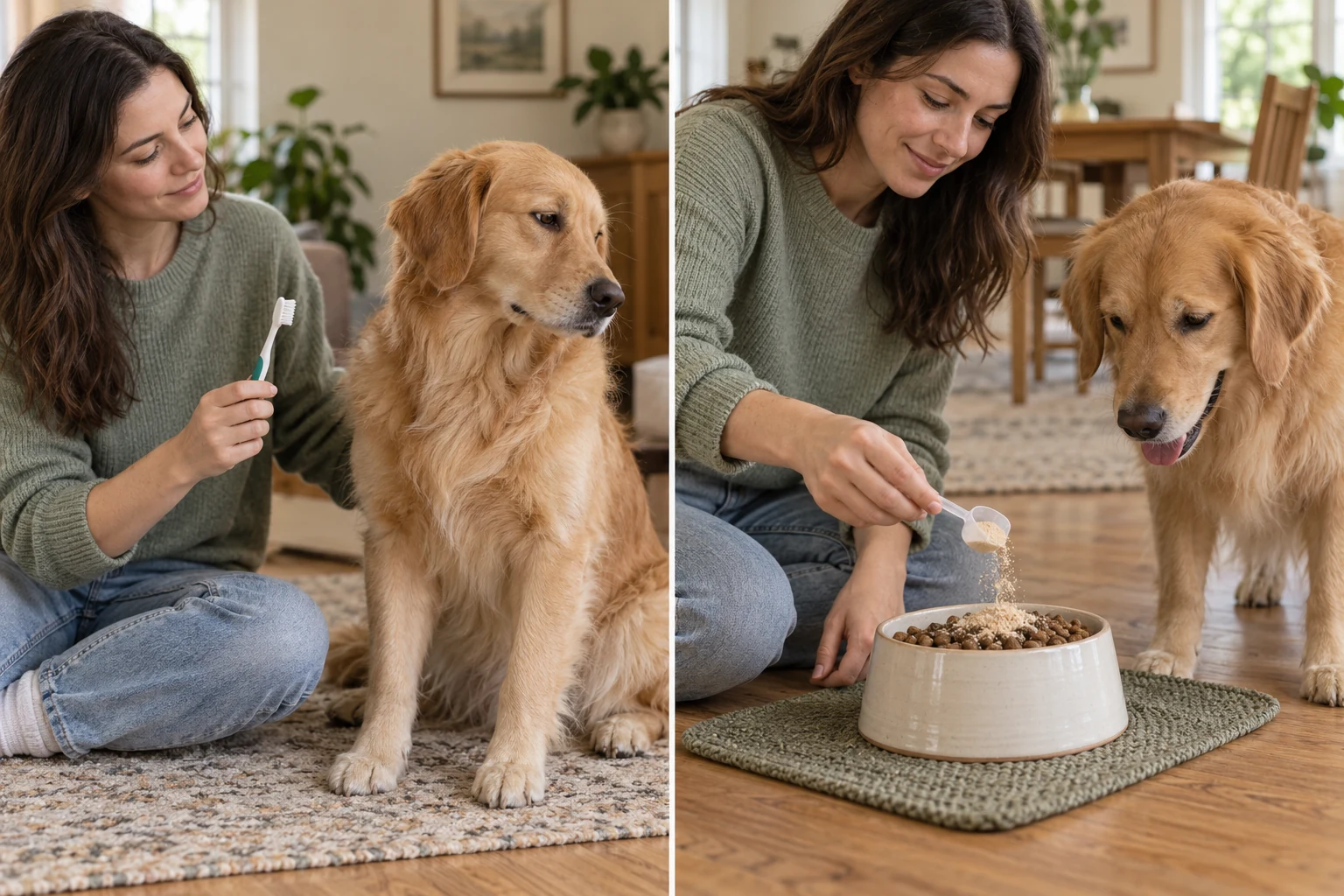
A soft brush cleans the tooth surface. Build tolerance gradually, with your vet’s guidance.
Measure, sprinkle and serve. A convenient addition to food, without a separate mouth-handling session.
Convenience is the advantage shown here. This is not evidence that powder cleans as well as, or nearly as well as, brushing.
Build a routine that works for you ↗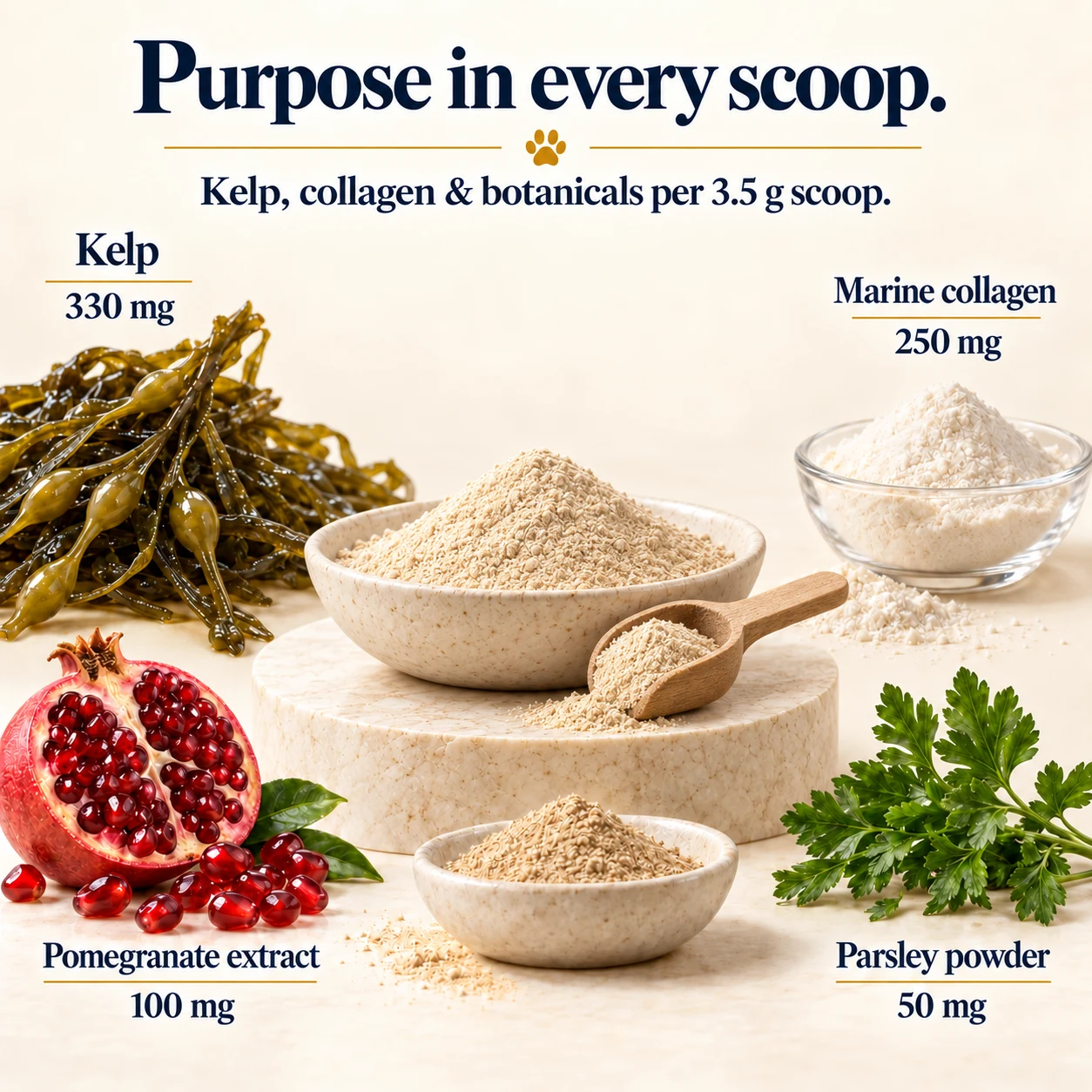
A familiar meal. A new daily habit.
Dental support.
Sprinkled into their day.
Pup Choice Dental Powder pairs oral-health ingredients with pork liver for savory palatability. Designed for breath, plaque and tartar management, and gum support—as part of your dog’s wider dental-care plan.
- A named veterinary formulation review
- Ingredients and amounts you can inspect
- Short-term acceptance results with the methods explained
Support claims reflect formulation assessment. No controlled dental-outcome trial on the finished powder is presented.
Open the evidence
Good questions deserve sources.
Browse the annotated evidence library → · Follow the formulation’s development →
23 dogs. Two days. Owner-reported.
Acceptance includes delayed eating.
A vet’s assessment
Read Joseph Menicucci, DVM, MBA’s formulation review and exactly what his recommendation covers.
Read the veterinary review →Ingredients & published studies
See canine studies on other formulations, with a clear explanation of what they can—and cannot—tell us about ours.
Explore the research →A clearer standard
What dental-product
claims actually mean.
“Vet recommended” is not the same as “clinically proven.” A taste test does not measure tartar. And no powder replaces treatment for a painful tooth.
Learn to read dental-product claims ↗We show you
the evidence.
And its limits.
Quick answers
Common dog dental questions
Why does my dog have bad breath?
Persistent odor can accompany plaque, gum disease or a painful tooth; food is not the only explanation. Arrange a veterinary examination if it persists, especially with bleeding, drooling or altered chewing. Freshening breath alone does not diagnose or treat the cause.
What is the difference between plaque and tartar?
Plaque is a soft bacterial film. Tartar, also called calculus, is mineralized buildup. Daily brushing disrupts plaque; established tartar needs a veterinary assessment and may require professional scaling.
What if my dog will not let me brush?
Build comfort in short, rewarded steps and ask your vet whether pain is contributing. Discuss suitable dental diets, chews or other adjuncts. A powder is easy to add to a meal, but convenience does not establish equivalent plaque removal.
Does dental powder replace brushing?
No. A powder can support a daily oral-care plan, but it does not provide the same mechanical cleaning as brushing or replace veterinary assessment.
How much does dog teeth cleaning cost?
There is no single reliable price for every dog. Location, imaging, anesthesia, extractions and disease severity change the bill. Our cost guide links real clinic examples and explains what to request in an itemized estimate.
Do dental powders for dogs work?
Evidence depends on the exact formulation, dose and outcome. Some products or related formulations have controlled canine studies. For Pup Choice, the evidence presented is a research-informed formula, a veterinary assessment and a short acceptance test; a controlled dental-outcome trial of the finished powder is not presented.
The complete guide